Emotional Intelligence at Work: How It Helps You Grow
Emotional intelligence at work is the ability to notice what is happening inside you, understand how emotions affect your behavior, read the situation around you, and choose a useful response. It does not mean being agreeable all the time or staying calm while other people treat you badly. In professional life, emotional intelligence helps you turn emotional information into better decisions, clearer conversations, and more reliable collaboration.
Quick answer: Emotional intelligence supports career growth because people who manage reactions, listen carefully, handle disagreement, and respond well to feedback are easier to trust with complex work. These skills do not replace expertise. They make your expertise easier for other people to see and work with.
What emotional intelligence looks like at work
In a workplace, emotional intelligence is visible in small moments. You notice that a message made you defensive and wait before replying. You realize a colleague is confused rather than careless and ask a clarifying question. You can say that a deadline is unrealistic without turning the conversation into a personal accusation.
These behaviors usually involve four connected abilities: self-awareness, emotional regulation, empathy, and relationship management. Self-awareness tells you what you are feeling and why. Regulation gives you enough space to decide what to do next. Empathy helps you understand another person's perspective. Relationship management turns that understanding into communication and cooperation.
Why it affects career growth
Early in a career, technical ability may be enough to complete assigned tasks. As responsibility increases, work becomes more interdependent. You need to coordinate priorities, explain tradeoffs, negotiate deadlines, influence decisions, and repair misunderstandings. At that point, performance is partly judged through interaction.
Imagine two specialists who deliver equally strong work. One becomes defensive whenever a manager asks a question, goes silent during disagreement, and sends rushed messages when overloaded. The other explains concerns, asks for context, and makes the next step visible. The second person is more likely to be trusted with clients, mentoring, or leadership because collaboration feels safer and more predictable.
This is not always fair. Some organizations reward confidence theatrics or conformity instead of real competence. Emotional intelligence should therefore be used as a career tool, not as a demand to absorb poor management. If the workplace is abusive, discriminatory, or chronically unsafe, better communication alone will not solve the problem.
Self-awareness: the skill behind better choices
Many workplace problems begin before the conversation starts. You may interpret a short message as criticism, assume a delayed reply means rejection, or agree to a task because saying no feels dangerous. Without self-awareness, the first emotional interpretation can quietly become a decision.
Try a three-question pause:
- What am I feeling right now?
- What story am I telling myself about this situation?
- What result do I want from my next action?
For example, a project lead says, “We need to revisit this section.” You feel embarrassed and hear, “Your work is poor.” A more useful response is to separate fact from interpretation: the section needs revision, but the reason and standard are still unknown. You can ask, “Which part is missing the mark, and what would a stronger version look like?”
Emotional regulation does not mean emotional suppression
Regulation means keeping enough control to act intentionally. Suppression means pretending nothing affects you until the emotion leaks out as sarcasm, avoidance, or exhaustion. A regulated employee can say, “I am too frustrated to discuss this productively for the next ten minutes. I will return with a proposal.” That is very different from slamming a laptop shut or agreeing while internally preparing to resent the team.
Useful techniques are simple and repeatable: slow your breathing before a difficult reply, write the key point before entering a meeting, name the decision that must be made, and ask for a short pause when the conversation becomes unproductive. If strong anxiety, persistent exhaustion, or low mood is affecting daily functioning, workplace techniques are not a substitute for professional mental health support.
Empathy, listening, and the quality of your conversations
Empathy at work is not mind-reading. It is the discipline of checking your assumptions. When a colleague misses a handoff, start with curiosity: “What got in the way?” You may discover unclear ownership, a competing deadline, or an information gap. The explanation does not remove accountability, but it improves the solution.
Active listening also changes how people experience your leadership. Summarize what you heard, distinguish the concern from the proposed solution, and ask one precise follow-up question. In a one-to-one meeting, “You are worried that the scope is growing faster than the timeline. Is that the main risk?” is more useful than immediately offering advice.
How emotional intelligence helps with feedback and conflict
Feedback is easier to use when you do not treat it as a verdict on your identity. Look for the behavior, the impact, and the requested change. If feedback is vague, ask for an example. If it is unfair, you can disagree respectfully and document the relevant facts.
When giving feedback, describe what happened instead of labeling the person. “The client received three different versions, so approval was delayed. Let us choose one owner for final sign-off” creates a path forward. “You are disorganized” creates defensiveness without providing a repair.
Conflict becomes more manageable when you address it while the issue is still specific. State the shared goal, describe the observable problem, explain its impact, and make a request. This structure is especially useful in remote teams, where tone is easy to misread and silence can stretch for days.
A practical development plan
- Track triggers for one week. Note the situation, your reaction, and what you did next.
- Choose one communication behavior. For example, ask a question before making an assumption.
- Request concrete feedback. Ask a trusted colleague when your communication is clearest and when it becomes difficult to follow.
- Practice one difficult sentence. Prepare language for saying no, asking for support, or challenging a deadline.
- Review outcomes, not perfection. Emotional intelligence grows through small corrections, not through never feeling irritated or nervous.
Common mistakes to avoid
Do not confuse emotional intelligence with constant positivity, endless patience, or being the team's unpaid therapist. Do not use empathy to avoid accountability. Do not expect yourself to regulate every reaction while ignoring workload, unclear roles, or poor leadership. A mature approach combines self-awareness with boundaries.
FAQ
Can emotional intelligence be learned?
Yes. Awareness, listening, emotional regulation, and feedback habits can improve through deliberate practice. Progress is easier to see in repeated situations than in a single dramatic moment.
Is emotional intelligence more important than technical skill?
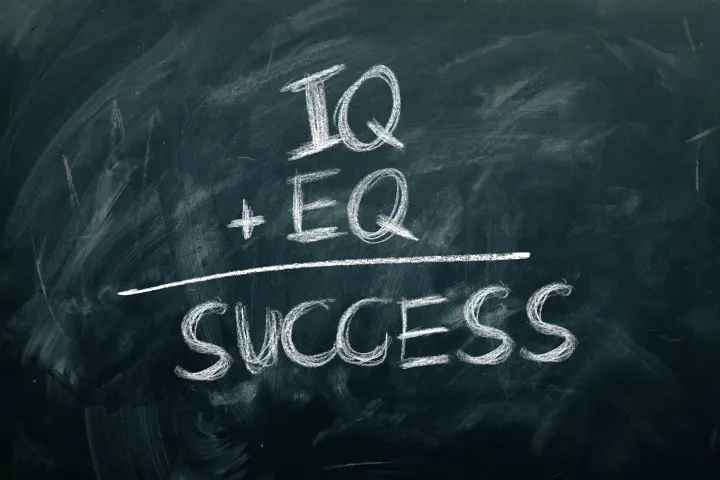
No. Technical competence and emotional intelligence solve different problems. Career growth usually depends on how well you combine expertise with communication and reliable collaboration.
What is the fastest place to start?
Start with the pause between feeling and responding. Name the emotion, check the story you are telling yourself, and choose the next action based on the outcome you want.
Emotional intelligence helps you grow at work by making your judgment easier to trust. You still need knowledge, results, and a workplace that rewards fair behavior. But when you can understand your reactions, communicate clearly, and handle tension without creating unnecessary damage, more opportunities become workable.